<?xml version="1.0" encoding="utf-8"?>
<feed xmlns="http://www.w3.org/2005/Atom">
    <title>Taungurung News</title>
    <link rel="alternate" type="text/html" href="http://taungurung.net/" />
    <link rel="self" type="application/atom+xml" href="http://taungurung.net/atom.xml" />
   <id>tag:taungurung.net,2015://1</id>
    <link rel="service.post" type="application/atom+xml" href="http://taungurung.net/mt/mt-atom.cgi/weblog/blog_id=1" title="Taungurung News" />
    <updated>2015-10-04T02:08:01Z</updated>
    <subtitle>Voices of people of the Taungurung Clan</subtitle>
    <generator uri="http://www.sixapart.com/movabletype/">Movable Type 3.2</generator>
 
<entry>
    <title>WW1 Veterans </title>
    <link rel="alternate" type="text/html" href="http://taungurung.net/2015/10/ww1_veterans.html" />
    <link rel="service.edit" type="application/atom+xml" href="http://taungurung.net/mt/mt-atom.cgi/weblog/blog_id=1/entry_id=52" title="WW1 Veterans " />
    <id>tag:taungurung.net,2015://1.52</id>
    
    <published>2015-10-04T02:03:20Z</published>
    <updated>2015-10-04T02:08:01Z</updated>
    
    <summary>The history of many of our forebears who served in WW1 has never been fully recorded or acknowledged. The Victorian Aboriginal Remembrance Committee would love to hear about these brave men and to tell their stories. If you have anyone...</summary>
    <author>
        <name>Loraine Padgham</name>
        <uri>taungurung.net</uri>
    </author>
            <category term="Community Connections" />
            <category term="People" />
            <category term="Places" />
            <category term="Ventures" />
    
    <content type="html" xml:lang="en" xml:base="http://taungurung.net/">
        <![CDATA[<p>The history of many of our forebears who served in WW1 has never been fully recorded or acknowledged.  The Victorian Aboriginal Remembrance Committee would love to hear about these brave men and to tell their stories.  If you have anyone in your family who served in WW1 please contact Jessica.Horton@dpc.vic.gov.au who is currently putting together information on behalf of all Victorians to acknowledge their supreme contribution during that terrible time.</p>]]>
        <![CDATA[<p><a href="http://taungurung.net/Promotional%20poster%20for%20Aborignal%20Community%20-%20WW1%20research%20project.pdf">Download file</a></p>]]>
    </content>
</entry>
<entry>
    <title>Taungurung Implements</title>
    <link rel="alternate" type="text/html" href="http://taungurung.net/2015/09/taungurung_implements_1.html" />
    <link rel="service.edit" type="application/atom+xml" href="http://taungurung.net/mt/mt-atom.cgi/weblog/blog_id=1/entry_id=51" title="Taungurung Implements" />
    <id>tag:taungurung.net,2015://1.51</id>
    
    <published>2015-09-18T00:24:01Z</published>
    <updated>2015-09-18T00:41:36Z</updated>
    
    <summary>In order to survive for thousands of years, the Taungurung people created, developed and adapted their knowledge of equipment and tools to suit their environment. The ephemeral nature of those items has resulted in the fact that very few articles...</summary>
    <author>
        <name>Loraine Padgham</name>
        <uri>taungurung.net</uri>
    </author>
            <category term="Culture" />
    
    <content type="html" xml:lang="en" xml:base="http://taungurung.net/">
        <![CDATA[<p>In order to survive for thousands of years, the Taungurung people created, developed and adapted their knowledge of equipment and tools to suit their environment.  The ephemeral nature of those items has resulted in the fact that very few articles belonging to the Taungurung have survived.  Those that have survived are displayed in museums or are in private hands.</p>

<p>An interesting article I came across recently written by Aldo Massola a (former curator of Anthropology, National Museum of Victoria) provided much information about some of the items.  With his information and William Thomas sketch from his diary, I have collated a list of items that may have been commonly used by the Taungurung to obtain their food.</p>

<p><a href="http://taungurung.net/Weapon%20Description%20table.docx">Download file</a><br />
</p>]]>
        
    </content>
</entry>
<entry>
    <title>2015 Victorian Aboriginal Rememberance Service</title>
    <link rel="alternate" type="text/html" href="http://taungurung.net/2015/05/2015_victorian_aboriginal_reme.html" />
    <link rel="service.edit" type="application/atom+xml" href="http://taungurung.net/mt/mt-atom.cgi/weblog/blog_id=1/entry_id=49" title="2015 Victorian Aboriginal Rememberance Service" />
    <id>tag:taungurung.net,2015://1.49</id>
    
    <published>2015-05-15T04:06:40Z</published>
    <updated>2015-05-15T04:52:10Z</updated>
    
    <summary>Sunday 31st May at the Shrine of Remembrance, Melbourne, has been set aside as a day to honour Aboriginal and Torres Strait Islander service men and women who served in the armed forces of Australia. Over 800 Indigenous service personnel...</summary>
    <author>
        <name>Loraine Padgham</name>
        <uri>taungurung.net</uri>
    </author>
            <category term="People" />
    
    <content type="html" xml:lang="en" xml:base="http://taungurung.net/">
        <![CDATA[<p>Sunday 31st May at the Shrine of Remembrance, Melbourne, has been set aside as a day to honour Aboriginal and Torres Strait Islander service men and women who served in the armed forces of Australia.  Over 800 Indigenous service personnel volunteered to serve during WW1 and more than 3000 in WW11.  Those service men and women volunteered their service despite not being recognised as Australian citizens.  This recognition did not occur until the 1967 referendum.</p>

<p>It was through the tireless effort of Aunty Dot Peters to honour her father's service and memory that the first service was initiated over 10 years ago.  Since then other states have established similar commemorative services to honour their Indigenous personnel.  The Indigenous Remembrance Services have now become an annual event.</p>]]>
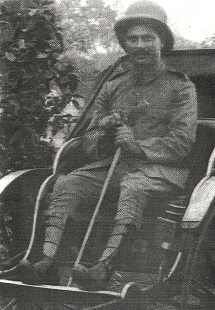
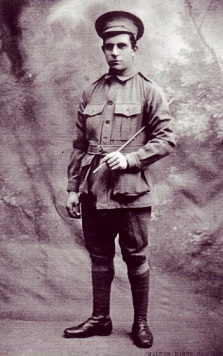
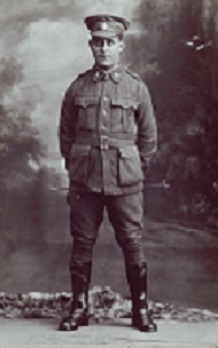
        <![CDATA[<p>Members of the Franklin family enlisted to serve their country during WW1.  They were Albert Franklin, Walter Franklin and Leslie Franklin.  Later in WW11, Norman Franklin served in PNG.</p>

<p><img alt="Albert Franklin small.jpg" src="http://taungurung.net/Albert%20Franklin%20small.jpg" width="215" height="310" />  Albert Franklin served overseas</p>

<p><img alt="Walter Lance Franklin small.jpg" src="http://taungurung.net/Walter%20Lance%20Franklin%20small.jpg" width="223" height="356" /> Walter Franklin served in France</p>

<p><img alt="Les Franklin small.jpg" src="http://taungurung.net/Les%20Franklin%20small.jpg" width="218" height="348" /> Leslie Franklin served in France</p>]]>
    </content>
</entry>
<entry>
    <title>Weaving - Fish Trap</title>
    <link rel="alternate" type="text/html" href="http://taungurung.net/2015/05/weaving_fish_trap.html" />
    <link rel="service.edit" type="application/atom+xml" href="http://taungurung.net/mt/mt-atom.cgi/weblog/blog_id=1/entry_id=48" title="Weaving - Fish Trap" />
    <id>tag:taungurung.net,2013://1.48</id>
    
    <published>2015-05-12T04:58:14Z</published>
    <updated>2015-05-15T04:55:06Z</updated>
    
    <summary>The Koori Heritage Trust recently conducted a community development activity to train interested people in the techniques required to produce a traditional fish trap. A number of sessions were conducted and the trap was completed at home after many hours...</summary>
    <author>
        <name>Loraine Padgham</name>
        <uri>taungurung.net</uri>
    </author>
            <category term="Art" />
    
    <content type="html" xml:lang="en" xml:base="http://taungurung.net/">
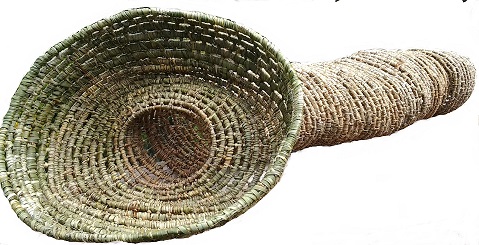
        <![CDATA[<p>The Koori Heritage Trust recently conducted a community development activity to train interested people in the techniques required to produce a traditional fish trap.</p>

<p>A number of sessions were conducted and the trap was completed at home after many hours of twisting and twirling the flax.  Each stem of the flax grass was stripped into 1-2 mm wide strips and used to sculpt the trap.  The most difficult part of process was to maintain a constant long cylinder diameter and produce the lip of the trap.  Never the less I was happy with the final result and have started weaving another trap.  Unfortunately my flax plant is not producing its leaves fast enough so things are currently at a standstill while nature does it's business and produces more leaves.</p>

<p><img alt="fishtrapsmall.jpg" src="http://taungurung.net/fishtrapsmall.jpg" width="479" height="245" /><br />
</p>]]>
        
    </content>
</entry>
<entry>
    <title>The Australian Mob</title>
    <link rel="alternate" type="text/html" href="http://taungurung.net/2013/03/the_australian_mob.html" />
    <link rel="service.edit" type="application/atom+xml" href="http://taungurung.net/mt/mt-atom.cgi/weblog/blog_id=1/entry_id=47" title="The Australian Mob" />
    <id>tag:taungurung.net,2013://1.47</id>
    
    <published>2013-03-13T05:34:01Z</published>
    <updated>2013-03-13T22:43:36Z</updated>
    
    <summary> Many of John Franklin and Harriet Tull&apos;s descendants who attended the Franklin Reunion on the Saturday afternoon. Family trees were put up for the children of John Franklin and Harriet Tull. John Charles Franklin&apos;s line was the largest, taking...</summary>
    <author>
        <name>Loraine Padgham</name>
        <uri>taungurung.net</uri>
    </author>
            <category term="Community Connections" />
            <category term="Events" />
            <category term="People" />
            <category term="Places" />
    
    <content type="html" xml:lang="en" xml:base="http://taungurung.net/">
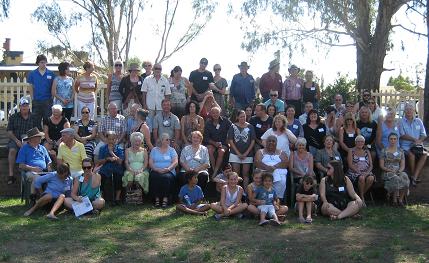
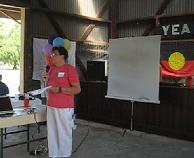
        <![CDATA[<p><img alt="GroupPhoto.JPG" src="http://taungurung.net/GroupPhoto.JPG" width="429" height="263" align="center" vspace=10 hspace=10/>  </p>

<p>Many of John Franklin and Harriet Tull's descendants who attended the Franklin Reunion on the Saturday afternoon.</p>

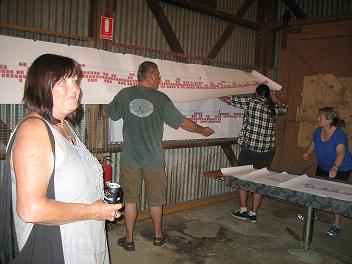
<p><img alt="SettingUp1.JPG" src="http://taungurung.net/SettingUp1.JPG" width="352" height="264" align="left" vspace=10 hspace=10/>  Family trees were put up for the children of John Franklin and Harriet Tull.  John Charles Franklin's line was the largest, taking up the length of a whole wall and displaying five generations of family members.  </p>
<p></p>

<p><br />
</p>]]>
        
    </content>
</entry>
<entry>
    <title>John Franklin - The Facts So Far</title>
    <link rel="alternate" type="text/html" href="http://taungurung.net/2013/03/johnn_franklin_the_facts_so_fa.html" />
    <link rel="service.edit" type="application/atom+xml" href="http://taungurung.net/mt/mt-atom.cgi/weblog/blog_id=1/entry_id=46" title="John Franklin - The Facts So Far" />
    <id>tag:taungurung.net,2013://1.46</id>
    
    <published>2013-03-13T02:15:21Z</published>
    <updated>2015-09-17T22:36:03Z</updated>
    
    <summary> Dr Meg Dillon, (Social Historian) has assembled the efforts of a number of researchers including that collected by a small group of Franklin descendants into a comprehensive document detailing the known and confirmed knowledge of John Franklin. The efforts...</summary>
    <author>
        <name>Loraine Padgham</name>
        <uri>taungurung.net</uri>
    </author>
            <category term="Community Connections" />
            <category term="Events" />
            <category term="People" />
            <category term="Places" />
    
    <content type="html" xml:lang="en" xml:base="http://taungurung.net/">
        <![CDATA[<p><img alt="Meg.jpg" src="http://taungurung.net/Meg.jpg" width="194" height="158" align="right" vspace=10 hspace=10/> Dr Meg Dillon, (Social Historian) has assembled the efforts of a number of researchers including that collected by a small group of Franklin descendants into a comprehensive document detailing the known and confirmed knowledge of John Franklin.  The efforts of this research were presented at the Franklin Reunion over the Labour Day weekend.   While this research was extensive it was unable to definitively answer the question of 'Who was John Franklin?"  Research will continue in the hope that one day an important document will be uncovered at the Public Records Office or some other repository that will shed important new light on his origins and his connection with the Yea district in the 1840s.</p>

<p>As a member of the research team I would particularly like congratulate the other members of the  research team and the quality of their investigations and materials in spite of not receiving any support or assistance from the TCAC.  Research such as this provides a priceless asset to all Taungurung people and not just to the Franklin family.</p>

<p><br />
<a href="http://taungurung.net/Franklin%20Reunion%20Lecture%202013.pdf">Download file</a></p>

<p><br />
</p>]]>
        
    </content>
</entry>
<entry>
    <title>The Franklin-Taungurung Heritage</title>
    <link rel="alternate" type="text/html" href="http://taungurung.net/2013/03/post_1.html" />
    <link rel="service.edit" type="application/atom+xml" href="http://taungurung.net/mt/mt-atom.cgi/weblog/blog_id=1/entry_id=45" title="The Franklin-Taungurung Heritage" />
    <id>tag:taungurung.net,2013://1.45</id>
    
    <published>2013-03-13T01:59:31Z</published>
    <updated>2013-03-13T05:22:53Z</updated>
    
    <summary> Carol Sonogan, Linguist and Researcher, delivered an informative and thought provoking presentation at the recent Franklin Reunion. Details of Carol&apos;s presentation can be found on the following link. Download file...</summary>
    <author>
        <name>Loraine Padgham</name>
        <uri>taungurung.net</uri>
    </author>
    
    <content type="html" xml:lang="en" xml:base="http://taungurung.net/">
        <![CDATA[<p><img alt="CarolSonogan.jpg" src="http://taungurung.net/CarolSonogan.jpg" width="230" height="213" align="right" vspace=10 hspace=10/> <br />
Carol Sonogan, Linguist and Researcher, delivered an informative and thought provoking presentation at the recent Franklin Reunion.  Details of Carol's presentation can be found on the following link.</p>

<p></p>

<p><a href="http://taungurung.net/Reunion%20shorter%20presentation.doc">Download file</a><br />
</p>]]>
        
    </content>
</entry>
<entry>
    <title>Dedication to Aunty Irene Lawrey</title>
    <link rel="alternate" type="text/html" href="http://taungurung.net/2013/03/dedication_to_aunty_irene_lawr.html" />
    <link rel="service.edit" type="application/atom+xml" href="http://taungurung.net/mt/mt-atom.cgi/weblog/blog_id=1/entry_id=44" title="Dedication to Aunty Irene Lawrey" />
    <id>tag:taungurung.net,2013://1.44</id>
    
    <published>2013-03-12T23:41:38Z</published>
    <updated>2013-03-13T08:02:07Z</updated>
    
    <summary> Sandra Smith Aunty Irene&apos;s close friend and colleague standing next to Irene&apos;s memorial plaque at the Frog Pond, Yea Wetlands Family, friends and associates gathered near the frog pond at the Yea Wetlands on Sunday to pay their respects...</summary>
    <author>
        <name>Loraine Padgham</name>
        <uri>taungurung.net</uri>
    </author>
            <category term="People" />
    
    <content type="html" xml:lang="en" xml:base="http://taungurung.net/">
        <![CDATA[<p><img alt="SmallSandraSmith.JPG" src="http://taungurung.net/SmallSandraSmith.JPG" width="212" height="282" align="left" vspace=10 hspace=10 />  </p>

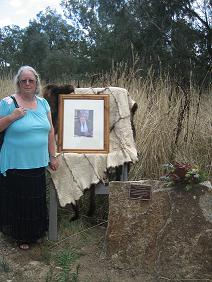
<p>Sandra Smith Aunty Irene's close friend and colleague standing next to  Irene's memorial plaque at the Frog Pond, Yea Wetlands</p>

<p></p>

<p></p>

<p>Family, friends and associates gathered near the frog pond at the Yea Wetlands on Sunday to  pay their respects to Aunty Irene Lawrey who passed away almost two years ago.  A permanent bronze plaque was put in place near the frog pond (Irene's favourite spot) to honour Aunty Irene and serve as a remininder of the esteem in which Irene was held for her work and dedication to the Franklin family.</p>]]>
        <![CDATA[<p><em>Following is the script of the dedication presented by Loraine Padgham</em>  A most important person is missing from this weekend’s celebrations – Irene Lawrey.  </p>

<p>Aunty Irene was a key person with a huge understanding of the Franklin family and the Indigenous people who inhabited this region before white settlement.  Aunty Irene contributed more the collective knowledge of the family than anyone else and was committed to preserving the family culture for the benefit of us all. Irene felt very strongly that the Franklin family had inherited a very rich legacy and this is one of reasons we are all gathered here in the Yea Wetlands today - to pay our respects and honour the memory of Aunty Irene Lawrey, a mother, friend, mentor and respected Taungurung Elder.</p>

<p>Irene Margaret Melhuish was born on 26th May 1938 in Launceston, Tasmania.  She was the oldest daughter of Rose Franklin and older sister to twins, Dorothy and Shirley. She married Peter Lawrey on the 19th of July 1959 at Holy Trinity Church, Coburg.   Irene and Peter had two children Sue and Neil both of whom were her pride and joy.  She had two grandchildren – Jayden and Victoria.  Sadly Neil passed away in 1997.  His death caused Irene much sadness and grief.  Through her inner strength and resolve she was able to overcome her broken heart.  With the passing of her beloved husband Peter in August 2002 at Lismore, NSW, she was once again forced to resort to her inner strength and with the support of friends and relations found solace in her spirituality.  It is now almost two years since Irene passed away on the 28th March 2011.  She was only 72 years young.  She had been unwell for some time and each time I saw her she expressed her exasperation that the cause could not be found but she was ever optimistic..</p>

<p>In the early 1940’s Irene lived on the Carter property approximately 4 miles out of Yea with her grandparents Herbert and Mabel.  With her grandparents, Irene then left the Yea district and went to live in Coburg, close to the Greenvale Sanatorium where her mother Rose was hospitalized.  Irene never knew her English father and when her mother died in 1952 she remained with her grandparents at Coburg until she married. One of her lasting memories of living with her grandparents was the joy she got from spending time with her grandfather Herbert, reading the Yea Chronicle.  The newspaper was posted to the Franklin family in Coburg every week for over 40 years and ensured the family kept a close link with Yea and their many friends and family still living in the district. Without Irene’s curiosity and eagerness to know about her grandfathers early life we wouldn’t know about how Herbert used to sleep on a pillow of gum leaves to ease his breathing, or how he used bee stings to ease pain, or about how nutritious wombat rissoles were.</p>

<p>Irene spent her school holidays camping in a three roomed hut on the high side of the Goulburn River at McLeish’s property at Killingworth.  It was here that she taught herself to swim and appreciate the pleasures of being in the bush.</p>

<p>In her younger days she worked as a florist and arranged flowers in her local church for services and for other special occasions and like many other members of the Franklin family shared a great love of dancing.</p>

<p>In her later years, Irene actively pursued the questions of her heritage beyond those she understood from her grandfather Herbert.  She wanted to know more about the Franklin family, where they lived, how they came to be in Yea, what properties did John Franklin farm and all those other questions that involved family anecdotes.  She tried to assemble the stories collected from relatives and friends into a more complete story of the family.  Because of her depth of research and impeccable memory she became very knowledgeable about the district, the Taungurung people and cultural history.  She was respected and renowned for her research by the Melbourne Museum and the State Library. She worked closely with Sandra Smith and between them they uncovered the answers to many questions but also ironically other questions and inconsistencies were highlighted.  Aunty Irene also provided assistance to Dr Jim Poulter and Fiona McAllen for their research and publications and to the Yea Wetlands Committee.</p>

<p>In 1994 when Peter became ill, Irene and Peter reluctantly left Strath Creek to move to a warmer climate at Lennox Head, northern NSW.   Before they left, they had one last drive around the district to collect those lasting memories that would be called up when they were living at Lennox Head.  It was on this occasion that while taking a photograph she stubbed her toe on a rock.   That rock turned out to be an Aboriginal greenstone axehead.  That find held an emotional and significant memory for Irene.  She was forever grateful to Peter for his patience, assistance and indulgence in helping her with her search and understanding of her Aboriginal heritage.  </p>

<p>After Peter died in 2002, Irene returned to Victoria, finding a comfortable home at St. Johns Park, Mooroolbark where she participated in community activities and made many lasting friends who also provided support and care for her.  When her health started to deteriorate she had the comfort and care of Carlene Miller and Penny Wagstaff and many others in that close community.  Irene was always there for others wherever she felt there was a need. She was also the person everybody turned to when they needed any practical help.</p>

<p>As you probably know, Irene was a very artistic person, always dabbling in painting, art and crafts, creating a beautiful garden and expressing her individuality in many ways.  A visit to Aunty Irene’s house at Mooroolbark was like visiting a gallery.  Her walls were decorated in photographs of her family, sideboards displayed samples of her arts and crafts.  She was well organized and knew exactly where things were to be found.  Often during visits to her at Mooroolbark our conversations would spark a thought and off she would dash into another room retrieving a book or photograph to emphasis the point she was making. I was always most impressed that she could lay her hands of information so readily.</p>

<p>With the management decision to close St. Johns Park, Irene moved to a retirement home at Kilmore.  She told me she had found a welcoming place on Taungurung Country to spend her retirement and proudly showed me around the premises with its peaceful rose gardens and private lounges.  She was even impressed that a picture of the old manse where John Franklin and Harriet Tull were married was hanging on the wall.  It pleased me that Irene had found a beautiful place to live and she seemed very contented.</p>

<p>Irene had a remarkable memory.  Where other people would have to look up a date, Irene could readily recall the date and details.   She was also a great talker and her stories were delivered with a vividness and freshness.  Sometimes she would ring me at work for a quick chat and ¾ hour later I would still be on the phone she could be so engaging.</p>

<p>Irene enjoyed being part of the Aboriginal community and invested a lot of her time in sharing her knowledge.  She participated as an Indigenous Elder on the Monash University Indigenous Education Advisory Committee, advised Sally Abbot-Smith and Russell Wealands on the Yea Wetlands Committee, assisted in the content for the video prepared by Fiona McAllen investigating her research into ‘Indigenous and Settler Interactions in Australia’.  A lasting legacy is a valuable video recorded by a young school boy, Jeremy Blaze as a school assignment when he interviewed Aunty Irene about ‘What it is to be an Aboriginal Elder’.  Her grace, ethics, compassion and dignity shone though in this video and will be one of the most treasured memories of Aunty Irene for her family and the Taungurung community. Together we completed her memories about her Uncle Norman and the way his horse won the Cameron Cup in PNG during WW11.  We had planned to prepare more videos but sadly she passed too soon.</p>

<p>Her daughter Sue, Eugene and grandson Jayden placed a small wooden cross at the start of the Franklin Track along with some of her ashes on the spot where she stood on the day of the official opening.  The remainder of her ashes were scattered at a favourite camping spot at Murrindindi along with the ashes of her husband Peter and their son Neil.</p>

<p>Irene was a kindred spirit and person who had spent many years putting together information about the Franklin family.  She willingly provided anyone with information about her research and kindly lent me photographs that I was able to scan – many of which are on display at the reunion.  She possessed a great interest in her Aboriginality which I believe was fostered by her respect and love for her grandparents, Herbert and Mabel.  I can just imagine her eagerly sitting by Herbert listening to the stories of his early life growing up around Yea and sharing those small snippets of traditional knowledge that would have been passed down from his father John Franklin.  </p>

<p>Irene was highly regarded for her generosity, integrity and graciousness all of which has been recognized by the work she did to honour the Franklin family in the development of the Yea Wetlands Franklin Walk.  It is a token of the esteem in which we hold Irene that that Franklin family organized this memorial plaque to honour our Elder and dear friend – Aunty Irene Lawrey.</p>

<p>When Irene moved from Mooroolbark, she entrusted me with much of her research and papers.  In amongst the files, I found a one page script adapted from Corinthians.  I suspect someone gave it to her because Aunty Irene would have been too modest to have collected it.  So in conclusion I’d like read a modified version of the script.   I ask you to take the time to listen to the sounds of nature surrounding us in this wonderful wetlands environment, and remember her voice, her laughter and the joy you found spending time with our Aunty Irene Lawrey. </p>

<p>Irene was patient and kind<br />
Irene did not envy or boast<br />
Irene was not conceited nor did she disrespect other people<br />
Irene was not self seeking or easily angered<br />
Irene never kept a record of wrongs nor delighted in evil.<br />
Irene rejoiced in the truth and always protected the rights of others<br />
Irene always trusted, hoped and persevered<br />
Irene always looked for the best and never looked back.<br />
Irene kept her faith until the end.</p>]]>
    </content>
</entry>
<entry>
    <title>Update - Stone Secrets</title>
    <link rel="alternate" type="text/html" href="http://taungurung.net/2013/03/stone_secrets.html" />
    <link rel="service.edit" type="application/atom+xml" href="http://taungurung.net/mt/mt-atom.cgi/weblog/blog_id=1/entry_id=39" title="Update - Stone Secrets" />
    <id>tag:taungurung.net,2011://1.39</id>
    
    <published>2013-03-12T23:18:06Z</published>
    <updated>2013-03-13T23:01:45Z</updated>
    
    <summary>The opportunity for Dr David Chalmers to present his findings was well received at the recent Franklin family reunion with many people hearing about his research and findings for the first time. His research and hypothesis sparked much interest by...</summary>
    <author>
        <name>Loraine Padgham</name>
        <uri>taungurung.net</uri>
    </author>
            <category term="Community Connections" />
            <category term="Events" />
            <category term="People" />
            <category term="Places" />
    
    <content type="html" xml:lang="en" xml:base="http://taungurung.net/">
        <![CDATA[<p>The opportunity for Dr David Chalmers to present his findings was well received at the recent Franklin family reunion with many people hearing about his research and findings for the first time.  His research and hypothesis sparked much interest by many of the older ‘Franklins’ who expressed a desire to visit the sites and gain first had experience of the landfall and environment.</p>

<p>^^^^^^^^^^^^^^^^^^^^^^</p>

<p>Two years ago Bernadette Franklin and Loraine Padgham (as representatives of the Taungurung) were invited to attend the launch of the culmination of six years of research undertaken by Prof. Chalmers at his Strathbogie Ranges property.</p>

<p><img alt="Euroamen.JPG" src="http://taungurung.net/Euroamen.JPG" width="350" height="210" /></p>

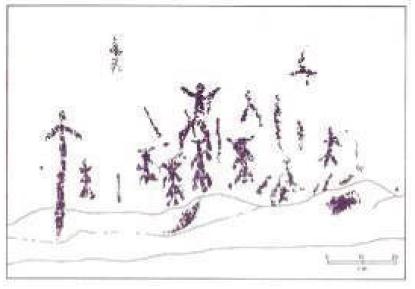
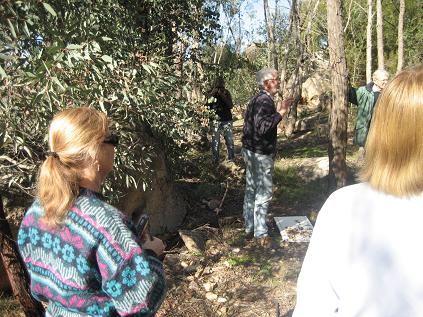
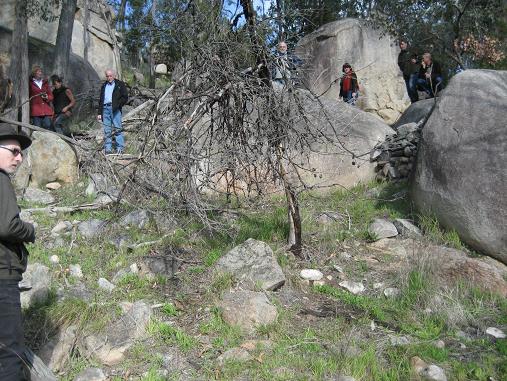
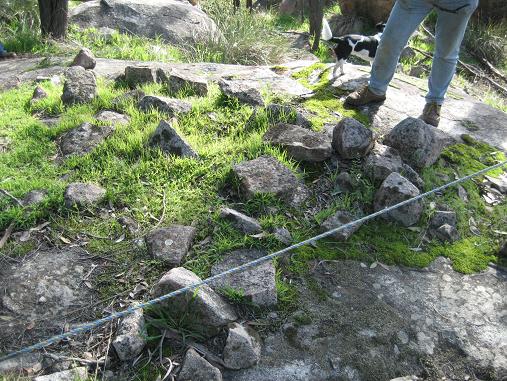
<p>Prof. Chalmers had been researching the unusual arrangement of stones on his property and concluded that they could have been established by the Nira Balug people (a clan of the Taungurung) to herd kangaroos up the hill, into a race, where they were trapped and separated for slaughter or breeding.  He compared the 'Euroa men' rock drawings found in the Strathbogie Ranges and theorised that the rock drawings could actually depict the local Aboriginal people herding and corralling kangaroos.</p>

<p><img alt="Chalmerstalk.jpg" src="http://taungurung.net/Chalmerstalk.jpg" width="350" height="210" /></p>

<p><img alt="Stonewall.jpg" src="http://taungurung.net/Stonewall.jpg" width="350" height="210" /></p>

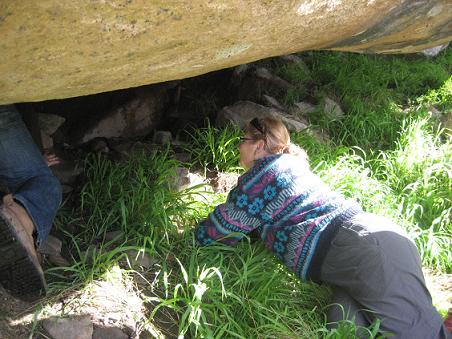
<p>Other interesting stone arrangements were shown to the group and speculation was made that one stone arrangement was in fact a calendar made in the shape of a giant bird - possibly Bunjil - with it's beak pointing eastward towards the rising sun.  Through cavities in the adjacent caves, sunlight could penetrate and shine on the back wall of the cave accurately depicting the time of the year.</p>

<p><img alt="Stonecalendar.jpg" src="http://taungurung.net/Stonecalendar.jpg" width="350" height="210" /></p>

<p><img alt="Cave.jpg" src="http://taungurung.net/Cave.jpg" width="350" height="210" /></p>]]>
        <![CDATA[<p>In addition to discussing his research, Prof.Chalmers presented a descendant of the Nira Balug clan with a grinding stone and other artefacts found in the area.</p>

<p><img alt="Grindingstone.jpg" src="http://taungurung.net/Grindingstone.jpg" width="350" height="210" /></p>

<p>The visit to the Chalmers property was rewarding and informative.  It was a delight to meet someone who is passionate about the country on which he lives and his desire to know more about the local Aboriginal people.  </p>

<p>Thank you Prof.Chalmers for sharing your theories and being such a warm and generous host.</p>

<p>Further information can be found in the Shepparton News dated 24-Jul-2010</p>

<p> </p>]]>
    </content>
</entry>
<entry>
    <title>The NZ Mob</title>
    <link rel="alternate" type="text/html" href="http://taungurung.net/2012/03/the_nz_mob_1.html" />
    <link rel="service.edit" type="application/atom+xml" href="http://taungurung.net/mt/mt-atom.cgi/weblog/blog_id=1/entry_id=43" title="The NZ Mob" />
    <id>tag:taungurung.net,2012://1.43</id>
    
    <published>2012-03-16T02:14:08Z</published>
    <updated>2012-03-16T03:14:06Z</updated>
    
    <summary>A special family reunion in NZ.</summary>
    <author>
        <name>Loraine Padgham</name>
        <uri>taungurung.net</uri>
    </author>
            <category term="People" />
    
    <content type="html" xml:lang="en" xml:base="http://taungurung.net/">
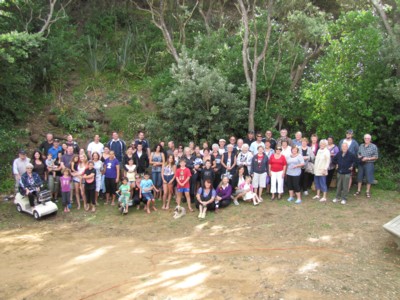
        <![CDATA[<p>Over 60 descendants of John Franklin and Harriet Tull gathered recently for a family reunion at Glinks Gully on the west coast of the northern island of New Zealand.<br />
<strong><br />
Why NZ?  </strong>The NZ arm of the Franklin family was established with the settling of William Henry Franklin at Dargaville around 1920, although further research needs to be undertaken to confrm the date.</p>

<p>William Henry Franklin was John's second son born in 1880 in the Yea district of Victoria.  As an experienced shearer, William worked the stations and properties in both NZ and Australia travelling to NZ on numerous occasions prior to permanently settling in Dargaville with his wife Eliza and young children.  The descendants of these children were well represented at the reunion and eager to know more of their extended family in Australia.</p>

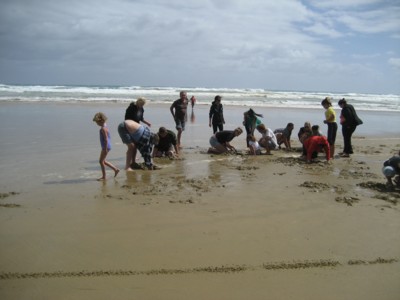
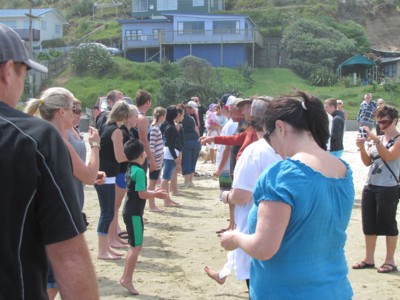
<p>The reunion was conducted over three days and included a traditional Maori Hungi and sadly the scattering of the ashes of William's youngest son Albert.  Glinks Gully is situated on the west coast of the north island, approximately three hours drive north of Auckland - a secluded spot of approximately 100 'batches' (holiday houses) only seconds from the beach.  Numberous activities including an egg thowing game and the collection of Tuatua were organised. The family had secured a special license before the family swarmed the beach to collect this sought after delicacy. The license permitted the collection of 200 of these prized shell fish which were later cooked and shared amongst the tribe.</p>

<p><img alt="Tuatua.jpg" src="http://taungurung.net/Tuatua.jpg" width="400" height="300" /></p>

<p><img alt="Egg Game.jpg" src="http://taungurung.net/Egg%20Game.jpg" width="400" height="300" /></p>

<p>Our NZ relatives are a fun loving and friendly bunch of people who willing shared their special place with us and warmly welcomed us to this special event.</p>

<p>With the organization of an Australian reunion well on the way, we hope and expect quite a few of our NZ cousins will be able to travel the Tasman and meet many of their other Franklin relatives unable to attend the NZ reunion.</p>

<p><img alt="Whole Group.jpg" src="http://taungurung.net/Whole%20Group.jpg" width="400" height="300" /></p>

<p></p>

<p><br />
</p>]]>
        
    </content>
</entry>
<entry>
    <title>Miromaa Language Program</title>
    <link rel="alternate" type="text/html" href="http://taungurung.net/2011/04/miromaa_language_program.html" />
    <link rel="service.edit" type="application/atom+xml" href="http://taungurung.net/mt/mt-atom.cgi/weblog/blog_id=1/entry_id=42" title="Miromaa Language Program" />
    <id>tag:taungurung.net,2011://1.42</id>
    
    <published>2011-04-28T06:40:54Z</published>
    <updated>2011-04-28T06:45:53Z</updated>
    
    <summary>VACL recently presented a two day workshop to those interested in becoming more familiar with the Miromaa software program designed to assist communities in language reclamation. The word Miromaa means &apos;saved&apos; in the Awabakal language (near Newcastle) and it aptly...</summary>
    <author>
        <name>Loraine Padgham</name>
        <uri>taungurung.net</uri>
    </author>
            <category term="Art" />
            <category term="Community Connections" />
            <category term="Ventures" />
    
    <content type="html" xml:lang="en" xml:base="http://taungurung.net/">
        <![CDATA[<p>VACL recently presented a two day workshop to those interested in becoming more familiar with the Miromaa software  program designed to assist communities in language reclamation.  The word Miromaa means 'saved' in the Awabakal language (near Newcastle) and it aptly describes this software that is currently being accepted internationally by first nations people in their language reclaimation activities.<br />
The Miromaa software provides an opportunity for linguists and others interested in preserving their language to organize, analyse and disseminate language information in a simple logical manner that can easily be understood within a few hours of training.  This well designed Australian software enables users to develop good archival practices and the opportunity to incorporate audio, video and images along with the text.  Once language materials has been uploaded into the database the database can then be easily manipulated to develop specific worksheets etc.for training purposes.<br />
Further information about the Miromaa program can be obtained from the following website.<br />
http://www.miromaa.com.au/about-miromaa/introduction.html<br />
</p>]]>
        
    </content>
</entry>
<entry>
    <title>Taungurung - A Brief History by Loraine Padgham</title>
    <link rel="alternate" type="text/html" href="http://taungurung.net/2011/04/taungurung_a_brief_history.html" />
    <link rel="service.edit" type="application/atom+xml" href="http://taungurung.net/mt/mt-atom.cgi/weblog/blog_id=1/entry_id=41" title="Taungurung - A Brief History by Loraine Padgham" />
    <id>tag:taungurung.net,2011://1.41</id>
    
    <published>2011-04-27T23:16:51Z</published>
    <updated>2015-10-04T01:00:43Z</updated>
    
    <summary>The Taungurung (Daung wurrung ) people occupy much of central Victoria. Our country encompasses the area between the upper reaches of the Goulburn River and it’s tributaries north of the Dividing Range. From Kilmore in the west, eastwards to Mount...</summary>
    <author>
        <name>Loraine Padgham</name>
        <uri>taungurung.net</uri>
    </author>
            <category term="Community Connections" />
    
    <content type="html" xml:lang="en" xml:base="http://taungurung.net/">
        <![CDATA[<p>The Taungurung (Daung wurrung ) people occupy much of central Victoria.  Our country encompasses the area between the upper reaches of the Goulburn River and it’s tributaries north of the Dividing Range.  From Kilmore in the west, eastwards to Mount Beauty, Benalla in the north and south to the top of the Great Dividing Range and boundaries with adjoining Aboriginal tribes are respected in accordance with traditional laws.  Traditionally, our people lived a hunter/ gatherer existence. The various clan groups migrated on a seasonal basis through their territory dependent upon the seasonal variations of weather and the availability of food. </p>

<p>The Taungurung people are closely affiliated with the neighboring tribes, through language, ceremonies and kinship ties. We are part of an alliance with the five adjoining tribes to form the Kulin Nation. Other members of the Kulin Nation are the Woiwurrung, Boonwurrung, Wathaurung, and Djadjawrung. The Kulin Nation group shared common dreamtime ancestors and creation stories, religious beliefs, economic and social relationships. </p>]]>
        <![CDATA[<p><strong>The Taungurung Legacy</strong></p>

<p>The Taungurung people shared a common bond in moiety affiliation with the other tribes. Their world was divided into two moieties: Waang (crow) and Bundjil (wedge tail eagle). Members of the tribe identified with one or the other of these moieties and it was their moiety which determined the pattern for marriage between individuals, clans and tribes and transcended local allegiances by obliging clan members to find spouses from some distant clan of the opposite moiety, either within or outside their own wurrung (language group). The Taungurung people consisted of nine clans. The Buthera Balug was located on the Upper Goulburn, as far down as Yea and Seymour. The Look Willam roamed the area on the Campaspe River, near Kilmore. The Moomoom Gundidj lived west of the Campaspe River, and northwest of Mitchellstown. The Nattarak Balug lived on the Coliban River and upper Campaspe River while the Nira Balug ‘Cave People’ bordered the Woiwurrung at the Great Dividing Range, and lived on creeks and hills near Kilmore, Broadford, Pyalong and westward towards Mt Macedon. The Warring-Illum Balug, (Warring being the name for the Goulburn River), lived on the Upper Goulburn River, at Yea and Alexandra and the Yarran-Illam were located on the east side of the Goulburn River, below Seymour. The Yeerun-Illam-Balug inhabited the area around Benalla and the Yowung-Illam- Balug lived at Alexandra, Mansfield and the Upper Goulburn River. Sadly there are descendants of only five of those clan groups that survive today. The nomadic nature of the Taungurung people enabled the people to utilise the resources available in their vast country. </p>

<p>Our ancestors had an intimate knowledge of their environment and were able to sustain the ecology of the each region and exploit the food available. A staple plant food was the mirniong (yam daisy) which provided a reliable source of carbohydrate.  Other plants such as the bracken fern (food and medicine), the tree fern, kangaroo apple and cherry ballart were a valuable food source and can still be seen growing on Taungurung country today. Wangnarra (stringybark) was used to construct yilam (shelters) or to weave benak (baskets). Fibrous plants, such as buarth (tussock grass) were produced burrt-tean (twine) for garrt-girrk (nets) while other tree species were utilised for their timber to fashion malgarr (shields), gudjerrun (clubs), wangim (boomerangs), darnuk (water carriers) and gurrong (canoes).  The rich resources of the permanent rivers, creeks and tributaries and associated floodplains enabled the Taungurung to have an abundance of fish and other wildlife. Fish were speared and trapped while water birds netted and the mirrm (kangaroo), gorbil (koala), and barraimal (emu) provided nourishing food. The pelts from the walert (native possum) were sewn together to form googarra ( cloak ) ideal for the often cold and wet conditions. Plants such as kurrajong provided fibers to weave garrt-girrk (nets) for harvesting the nutritious deberer (Bogong moth) in the summer. Taungurung would travel south during the deberer season and head northwards when the weather cooled. </p>

<p>When Europeans first settled the region in the early 1800s, the area was already occupied by Aboriginal people. From that time, life for the Taungurung people in central Victoria changed dramatically and was severely disrupted by the early establishment and expansion of European settlement. Traditional society broke down with the first settlers arrival and soon after, Aboriginal mortality rates soared as a result of introduced diseases, denial of access to traditional foods and medicines and conflict.  At various times, Aboriginal settlements were established in the area by missionaries and governments at Michellstown, Acheron and Coranderrk however despite relative success were eventually dissolved through various government policies. The Taungurung and other members of Kulin Nation were deeply impacted by the dictates of the various government assimilation and integration policies. Today, the descendants of the Taungurung form a strong and vibrant community.  Descendents of five of the original clan groups meet regularly at Camp Jungai—an ancestral ceremonial site. Elders assist with the instruction of younger generations in culture, history, and language and furthering of their knowledge and appreciation of their heritage as the rightful custodians of the Taungurung lands in Central Victoria. </p>

<p>Evidence of the Taungurung can be found in many places throughout Taungurung Country. Scar trees, rock shelters, rock art and even place names all indicate that we have been in this part of Victoria for thousands of years. While travelling through Taungurung lands you will be aware of the following towns. All these towns have a Taungurung origin. Benalla—benalta=big waterhole Delatite—Delotite, wife of Beeolite, clan head of the Yowung-illam-balluk clan, Murrindindi—murrumdoorandi = place of mists, mountain Trawool—trawalla = wild water, Nagambie—nogamby = lagoon.  </p>

<p>Many Taungurung people still live on their country and participate widely in the community as cultural heritage advisors, land management officers, artists and educationalist and are a ready source of knowledge concerning the Taungurung people from central are of Victoria. </p>

<p>We are pleased to welcome you to our country—to enjoy the landscapes, the flora and fauna. The Taungurung will continue to care for this country and welcome those who share a similar respect.<br />
</p>]]>
    </content>
</entry>
<entry>
    <title>VALE Aunty Irene Lawrey - The passing of a valued Elder</title>
    <link rel="alternate" type="text/html" href="http://taungurung.net/2011/03/passing_of_a_valued_elder.html" />
    <link rel="service.edit" type="application/atom+xml" href="http://taungurung.net/mt/mt-atom.cgi/weblog/blog_id=1/entry_id=40" title="VALE Aunty Irene Lawrey - The passing of a valued Elder" />
    <id>tag:taungurung.net,2011://1.40</id>
    
    <published>2011-03-29T04:43:06Z</published>
    <updated>2011-04-01T14:20:27Z</updated>
    
    <summary> It was with deep regret that Franklin descendants were informed of the recent sudden passing of Aunty Irene Lawrey. For many years Aunty Irene was an integral part of the family’s search for the history behind the Franklin’s relationship...</summary>
    <author>
        <name>Loraine Padgham</name>
        <uri>taungurung.net</uri>
    </author>
            <category term="Community Connections" />
            <category term="Events" />
            <category term="People" />
    
    <content type="html" xml:lang="en" xml:base="http://taungurung.net/">
        <![CDATA[<p><img alt="Irene Lawrey.JPG" src="http://taungurung.net/Irene%20Lawrey.JPG" width="190" height="367" align="left"   vspace=10 hspace=10/></p>

<p>It was with deep regret that Franklin descendants were informed of the recent sudden passing of Aunty Irene Lawrey.  For many years Aunty Irene was an integral part of the family’s search for the history behind the Franklin’s relationship with the Kilmore - Yea region.  There was no stone unturned or article unread as Aunty Irene pursued her knowledge about her Aboriginal heritage.  Her move to the nursing home at Kilmore in 2010 provided a wonderful location to continue her story.  She confided that she was glad to be living in Kilmore as she felt she was ‘home’ as she was on Taungurung country. </p>

<p>Aunty Irene’s quest for her history started as a young girl and was willingly shared amongst many Franklin descendants.  Documents, in the form of letters and official correspondence as well as photographs and anecdotes were readily exchanged with other family members to help compile and assemble a true history of the Nira Balug clan of the Taungurung.  Sadly, just as family members were in a position to help Aunty Irene document her findings she advised she needed time to regain her health and consequently this project was temporarily placed on hold.  </p>

<p>Fortunately many of her files, photographs and notes have been archived but it is her interesting yarns and stories she retained in her memory that will be lost to the rest of the family.</p>

<p>She will be sadly missed by her family and by all those who worked closely with her.  It is hoped that her work will be continued by other members of the Franklin family.</p>]]>
        <![CDATA[<p><br />
</p>]]>
    </content>
</entry>
<entry>
    <title>It&apos;s in the Genes</title>
    <link rel="alternate" type="text/html" href="http://taungurung.net/2011/01/its_in_the_genes.html" />
    <link rel="service.edit" type="application/atom+xml" href="http://taungurung.net/mt/mt-atom.cgi/weblog/blog_id=1/entry_id=38" title="It's in the Genes" />
    <id>tag:taungurung.net,2011://1.38</id>
    
    <published>2011-01-22T09:03:36Z</published>
    <updated>2011-03-09T17:09:07Z</updated>
    
    <summary> Going through the family album can be fun. Those old photographs can pose many questions and speculations. This was the case when I recently closely examined the photograph of my grandmother - Dolly Rubina Franklin (on the right) as...</summary>
    <author>
        <name>Loraine Padgham</name>
        <uri>taungurung.net</uri>
    </author>
            <category term="People" />
    
    <content type="html" xml:lang="en" xml:base="http://taungurung.net/">
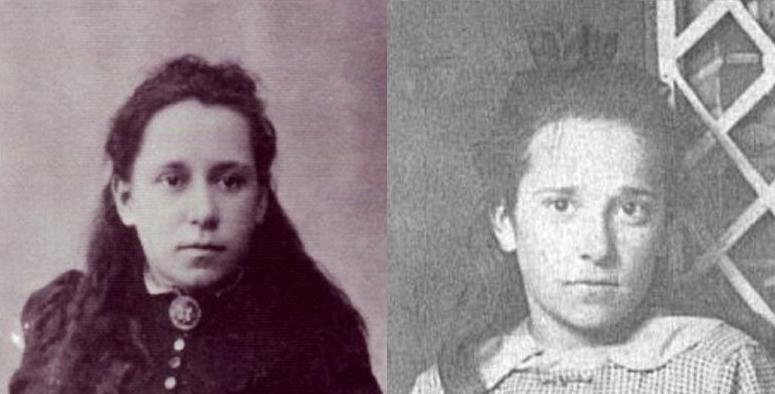
        <![CDATA[<p><img alt="hannahanddolly.jpg" src="http://taungurung.net/files/hannahanddolly.jpg" width="350" height="210" /></p>

<p>Going through the family album can be fun.  Those old photographs can pose many questions and speculations.  This was the case when I recently closely examined the photograph of my grandmother - Dolly Rubina Franklin (on the right) as a young teenager.  The photograph closely resembled another photograph I had in my collection.  That photograph was a picture of my great grand aunt - Hannah Franklin - also as a teenager.  The two photographs looked so similar - the resemblance was uncanny.  They could have been the same person.</p>]]>
        
    </content>
</entry>
<entry>
    <title>Ruth and Grant</title>
    <link rel="alternate" type="text/html" href="http://taungurung.net/2008/09/post.html" />
    <link rel="service.edit" type="application/atom+xml" href="http://taungurung.net/mt/mt-atom.cgi/weblog/blog_id=1/entry_id=35" title="Ruth and Grant" />
    <id>tag:taungurung.net,2008://1.35</id>
    
    <published>2008-09-10T03:34:56Z</published>
    <updated>2013-03-13T02:30:31Z</updated>
    
    <summary></summary>
    <author>
        <name>Loraine Padgham</name>
        <uri>taungurung.net</uri>
    </author>
            <category term="People" />
    
    <content type="html" xml:lang="en" xml:base="http://taungurung.net/">
        <![CDATA[<p><img alt="Ruth and Grant.jpg" src="http://taungurung.net/Ruth%20and%20Grant.jpg" width="350" height="450" /></p>

<p> </p>]]>
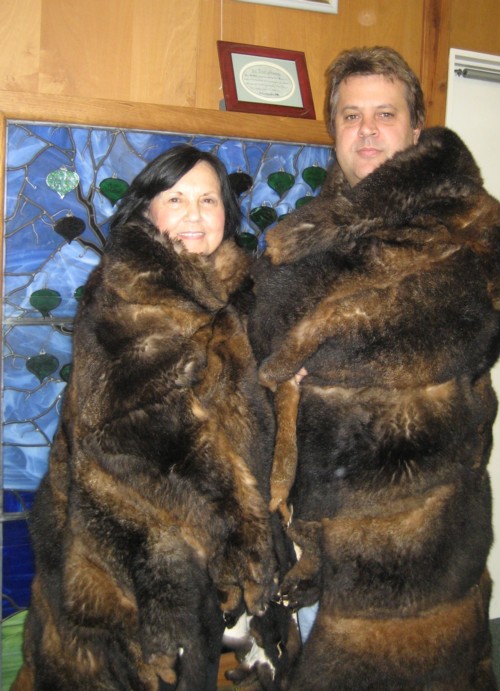
        <![CDATA[<p>Pictured above is Grant Hansen with his mother Ruth during a Franklin family gathering to work on the  Franklin possum skin cloak.  The pelts were donated to the Franklin family by Solution Support Services - a strong supporter of the Taungurung people.</p>

<p>While the gathering was an assembly of various Franklin members brought together to design images to reflect each line's association with Taungurung country, the event was a great success as it brought members of the families together to share stories and memories.</p>

<p>The cloak when finished will be available on request for any Franklin family member to use for special occasions.</p>]]>
    </content>
</entry>

</feed>